
These various theological categories – from Systematic to Apologetic – serve as essential tools for developing a Christian mind and constructing a solid foundation for thinking through life’s most important issues, while maintaining Scripture as our ultimate authority in understanding divine truth.

A woman with her arms outstretched, enjoying the fresh air and sunshine on a summer day, in a panoramic banner.
Theology

Beyond the Binary: The Logical Fallacy of the False Dilemma

The false dilemma—often termed the bifurcation fallacy or the either/or fallacy—occurs when an argument presents two mutually exclusive options while deliberately or naively ignoring viable alternatives. In theological debate, this error reduces rich biblical tension to an unyielding, artificial choice: either a professing believer lives in sustained, visible victory, or they were never truly born again at all.

There's More!
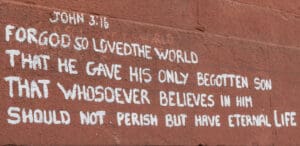
bible verse graffiti - john 3:16
Theology

Why John Wrote His Gospel: The Purpose Statement of John 20:31

The Apostle John doesn’t leave you guessing why the author picked up the pen. In the climax of his Gospel, he provides an explicit blueprint: “these are written that you may believe that Jesus is the Christ, the Son of God, and that believing you may have life in His name” (John 20:31). Salvation is not a labyrinth of moral performance or lifelong striving; it is a free gift received through a single act of faith.

There's More!
Human Hands Praying Towards the Sun with Beautiful Light Rays
Theology

Beyond Merit: Free Grace, Eternal Rewards, and the Accountability of the Christian Life

Free grace is often charged with promoting spiritual apathy, yet the Scriptures reveal that absolute grace and solemn accountability go hand in hand. By carefully distinguishing the gift of eternal life from the conditional reward of discipleship, believers are called to look beyond mere entrance into the Kingdom toward faithful stewardship before the Judgment Seat of Christ. Far from discarding works, grace secures our eternal destiny while establishing the framework for true, Spirit-led accountability.

There's More!
If Then logic statement written in white chalk on a black chalkboard isolated on white
Theology

If You Believe, You Have Life: Overcoming the Fallacy of Denying the Antecedent in Soteriology

The core soteriological promise of the New Testament is straightforward: belief in Christ guarantees the possession of everlasting life. For example, Jesus declares in John 6:47, “Most assuredly, I say to you, he who believes in Me has everlasting life.” In this proposition, simple faith in Christ functions as a sufficient condition for possessing eternal life. The fallacy of Denying the Antecedent occurs when an interpreter takes a conditional premise regarding discipleship or sanctification—such as “If a believer endures, he will reign with Christ” (2 Tim 2:12a)—and incorrectly infers: “Therefore, if a person does not endure, he is not eternally saved.” Paul explicitly refutes this logical fallacy in the very next verse: “If we are faithless, He remains faithful; He cannot deny Himself” (2 Tim 2:13). While unfaithfulness forfeits the reward of reigning, it does not and cannot negate the possession of eternal life, which was received as an unearned, irrevocable gift (Eph 2:8–9). Confusing a sufficient condition for entrance into heaven with necessary conditions for temporal discipleship collapses justification into works, undermining the believer’s absolute assurance.

There's More!
Hand writing logical fallacy text on blackboard
Theology

Misreading the Signs: Affirming the Consequent in Soteriological Debates

In soteriological discussions, logical precision is as critical as grammatical exactness. A frequent logical misstep committed by proponents of Lordship Salvation is the formal fallacy of affirming the consequent. By asserting that “If a person is saved, they will perform good works,” and observing good works, interpreters fallaciously infer that those works prove regeneration. Conversely, observing an absence of works is wrongly assumed to prove an absence of faith. This blog post examines how conditional logic functions in New Testament Greek and demonstrates why biblical assurance rests solely upon the explicit promise of Jesus Christ to the believer, rather than on logical fallacies applied to post-conversion behavior.

There's More!
Gavel, scales and law book
Theology

Accountability Without Condemnation: The Safety and Solemnity of the Bema

For the believer in Jesus Christ, the Judgment Seat is not a courtroom of terror where eternal destiny hangs in the balance, but a platform of honor where a loving Savior evaluates our faithfulness to dispense eternal rewards. Remove the fear of hell, and the true motivation for discipleship emerges: the eager anticipation of hearing the King say, “Well done.”

There's More!