
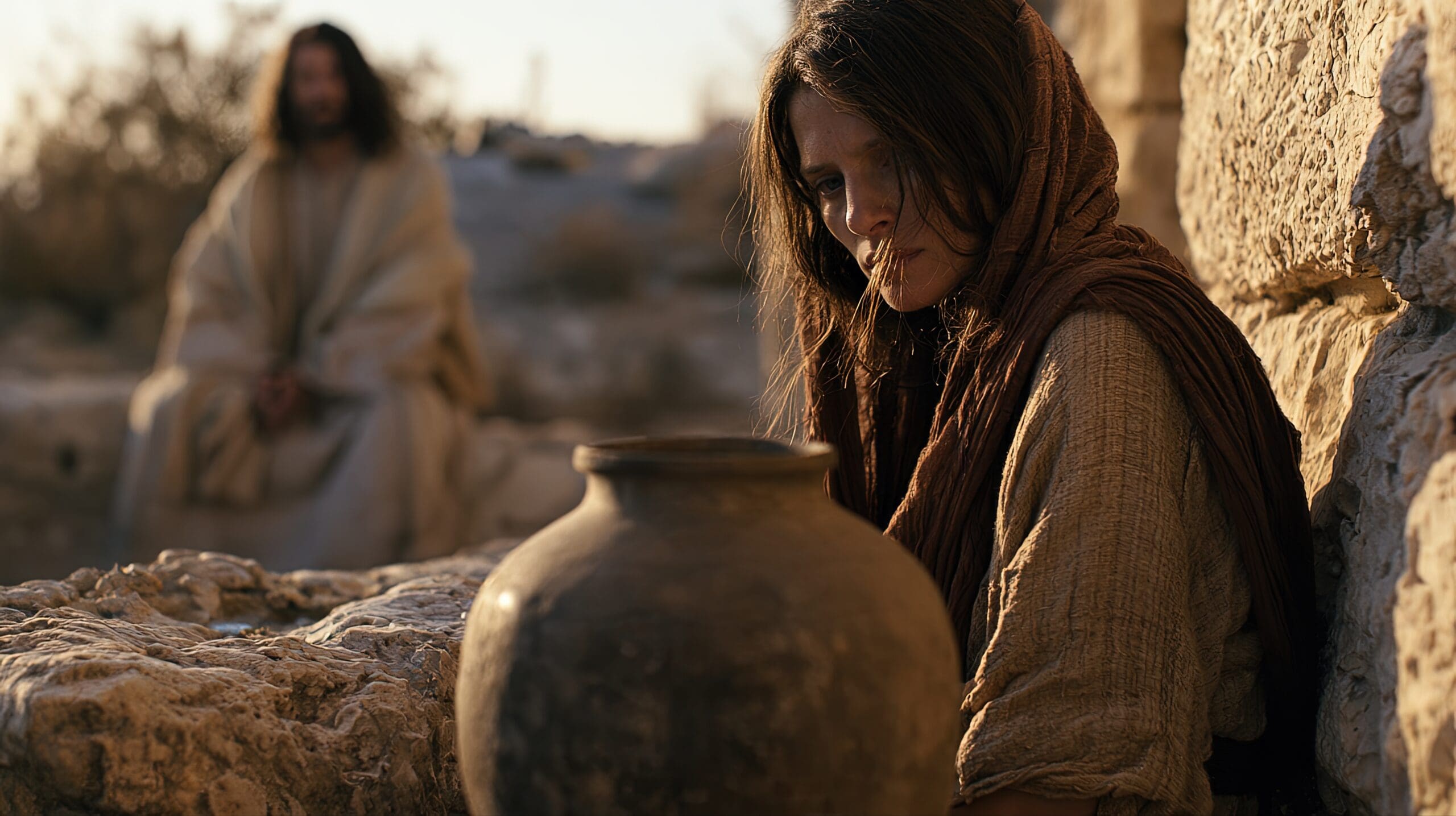
Under the blazing Mediterranean sun at the sixth hour, a Samaritan woman walked out to Jacob’s well. Arriving at noon was deliberate; it was the hour when she could avoid the murmurs and stares of her neighbors. She brought a clay water pot to draw physical water, bearing the quiet weight of broken relationships, social isolation, and religious confusion.
She expected an empty, solitary chore. Instead, she met the Giver of Life.
The dialogue recorded in John 4:7–26 strips away the religious complications we so often construct around salvation. When Jesus asks her for a drink, He intentionally bridges ethnic, social, and moral divides to reach a single thirsty soul. What unfolds next is one of the clearest, most comforting expositions of eternal life in the entire Gospel of John.
A Free Gift: “If You Knew…”
Jesus immediately shifts the conversation from earthly sustenance to spiritual reality:
“If you knew the gift of God, and who it is who says to you, ‘Give Me a drink,’ you would have asked Him, and He would have given you living water.” (John 4:10)
Notice how Jesus defines eternal life here. It is “the gift of God.”
A gift is not a wage earned by labor, nor is it a reward contingent upon prior moral reformation. Jesus did not tell her to go fix her tangled personal life before she could drink. He did not mandate church attendance, baptism, or a program of penance. He stated two conditions for obtaining this living water: knowing who He is, and asking.
The transaction is simple and unmerited: Ask, and He gives.
A Permanent Reality: “He Will Never Thirst”
The woman, thinking in purely physical terms, questioned how He could draw water without a bucket. Jesus clarified the divine nature of the water He provides:
“Whoever drinks of this water will thirst again, but whoever drinks of the water that I shall give him will never thirst. But the water that I shall give him will become in him a fountain of water springing up into everlasting life.” (John 4:13–14)
Earthly wells—whether career success, human relationships, philosophical pursuit, or religious legalism—run dry. You drink, and tomorrow you thirst again.
By contrast, the gift Jesus provides is permanent. The Greek construction in John 4:14 contains a strong double negative (ou mē dipsēsei eis ton aiōna), meaning literally that the one who drinks “shall never, by any means, thirst forever.”
Eternal life is not a probationary contract that God revokes when you falter. Once received, it becomes an internal artesian well, continuously springing up into everlasting life. If eternal life could be lost, it was never eternal, and Jesus’ promise that you will “never thirst” would be broken.
Truth Revealed: Grace Precedes Reformation
When Jesus gently addresses her five past husbands and current living situation (John 4:16–18), He is not disqualifying her from grace. Rather, He is revealing His omniscience. He proves that He knows everything about her, yet He still offers her living water.
She attempts a brief diversion into theological controversies—debating whether Jerusalem or Mount Gerizim was the proper place to worship. Religion always wants to talk about geography, rituals, and pedigree. Jesus cuts through the distraction: the Father seeks true worshipers who worship in spirit and truth (John 4:23–24). True worship begins not with human performance, but with an honest reception of God’s truth.
When the woman confesses her anticipation of the Messiah, Jesus gives the definitive declaration:
“I who speak to you am He.” (John 4:26)
The Simplicity of the Offer
The Samaritan woman left her water pot behind. She came seeking water that would evaporate by sunset; she left with eternal life bubbling up inside her soul.
The message of John 4 is clear:
- The Provider: Jesus, the promised Messiah and Son of God.
- The Provision: Eternal life, characterized as living water.
- The Price: Absolutely free to us, paid fully by Him.
- The Condition: Simply asking and believing in Him as the Christ.
Eternal life is not a summit you climb through self-effort; it is a fountain you kneel beside in faith. Have you taken that drink?