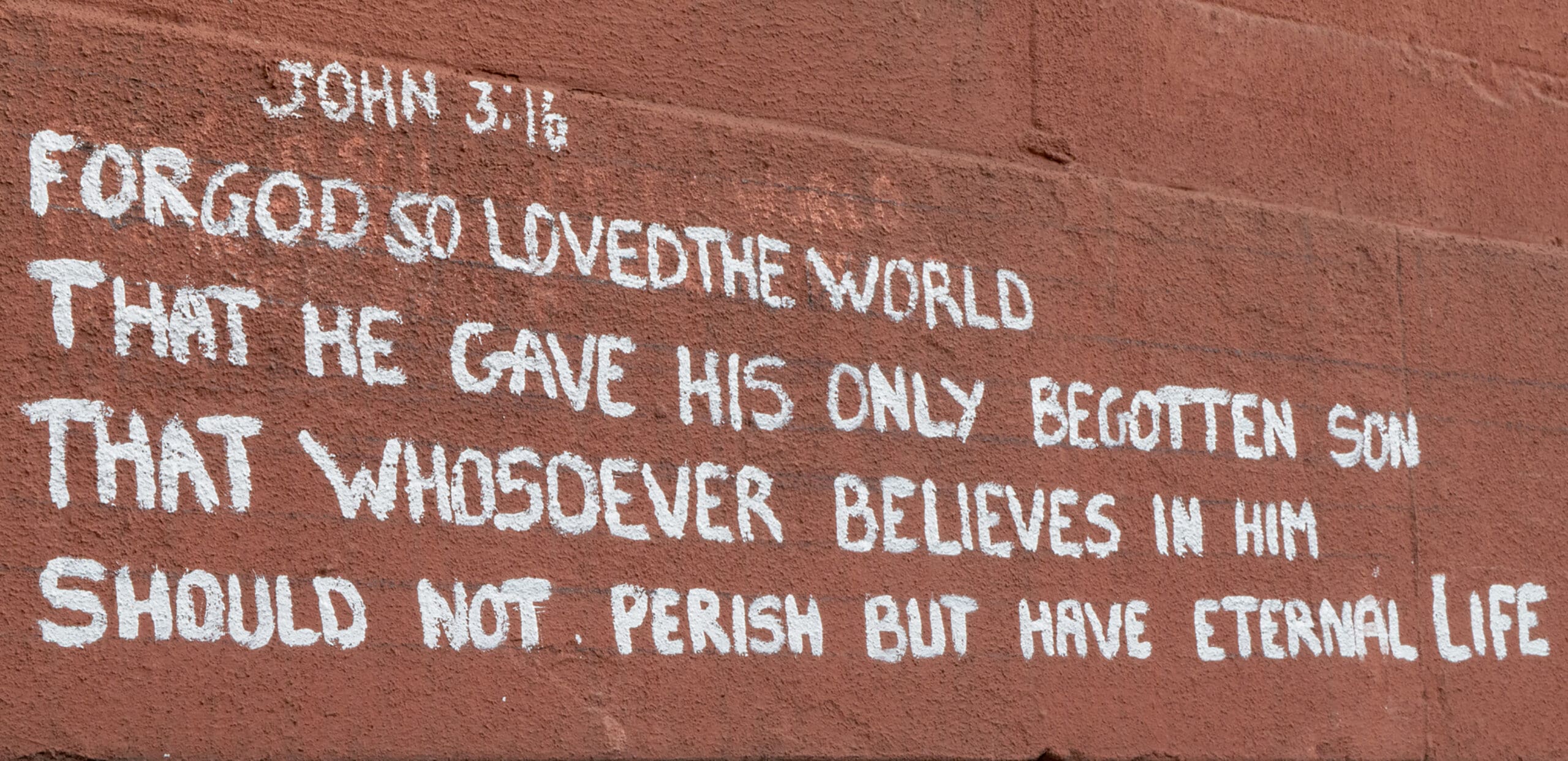

The Supreme Motive and the Costly Gift (John 3:14–16a)
John 3:16 is arguably the most recognized verse in human history, yet its theological precision is routinely compromised by theological additions. The verse opens with the divine motive: “For God so loved the world that He gave His only begotten Son” (John 3:16a, ESV). The Greek verb ēgapēsen reveals an unconditional, self-sacrificial love directed toward the kosmos—an ungodly, rebellious system alienated from its Creator. God’s love did not wait for humanity to clean itself up or pledge future fealty.
To ensure Nicodemus understood this, Jesus grounded His coming sacrifice in the typology of the wilderness serpent: “And as Moses lifted up the serpent in the wilderness, so must the Son of Man be lifted up” (John 3:14; cf. Num 21:4–9). The dying Israelites were not instructed to crawl to the pole, manufacture moral reform, or promise lifelong obedience; they simply looked and lived. Salvation is an act of pure reception. The Father paid the infinite cost by delivering His unique Son (ton huion ton monogenē) to the cross, securing an unearned gift (edōken) that is offered to sinners absolutely free.
Faith as the Sole and Sufficient Condition (John 3:16b–18)
The Lord Jesus articulates only one condition for receiving this gift: “that whoever believes in Him” (hina pas ho pisteuōn eis auton). In Johannine theology, pisteuō retains its standard lexical meaning: to be convinced of a truth, to trust, or to take God at His word. Modern lordship teaching routinely smuggles extraneous concepts into this phrase—such as commitment, behavioral surrender, or turning from sins—asserting that simple faith is mere “intellectual assent”. However, the fourth Gospel never once mentions repentance (metanoia), surrender, or discipleship obligations as prerequisites for eternal life.
The construction pas ho pisteuōn functions descriptively to identify the one who trusts Christ for His promise of salvation. Believing is not a meritorious work, nor an ethical crusade; it is the empty hand of a beggar receiving an unmerited bequest. The immediate verdict is total: “Whoever believes in him is not condemned” (ho pisteuōn eis auton ou krinetai, John 3:18). Condemnation is removed permanently at the instant of faith, wholly apart from human performance.
The Irrevocable Possession of Everlasting Life (John 3:16c; cf. John 5:24)
The climactic result of faith in Christ is that the believer “should not perish but have eternal life” (mē apolētai all’ echē zōēn aiōnion). The subjunctive mē apolētai guarantees absolute deliverance from eternal ruin, while echē denotes a present, continuing possession. Everlasting life is not an eschatological probation that awaits final behavioral verification; it is an irrevocable divine impartation received the second one believes. As the Lord affirmed elsewhere, the believer “has passed from death into life” and “shall not come into judgment” (John 5:24).
Clear soteriology requires distinguishing this unconditional gift of salvation from the costly call of discipleship. While entrance into the kingdom is given freely to all who look to Jesus in simple faith (John 3:16), reign, crowns, and heavenly treasure are earned through obedient discipleship (1 Cor 3:12–15; 2 Tim 2:12; Rev 2:26). John 3:16 establishes the baseline of our eternity: God loved, Christ died, we believe, and we live forever.